Week 4: Literature
Week 4 aims to have you branch out artistically. This week, instead of being given a
portion of a composition to build off of, you will be given a piece of media to consume.
The main goal of this week is to explore a larger prompt and to build up a piece that
captures the theme and feel of the reference material. Additionally, week 4 is about
pulling together a single, larger, coherent piece over the course of the week instead of
7 small individual pieces.
It is encouraged that you look back on your prior work over the course of the month and take inspiration from your various Composuary submissions. As part of your submission, you should provide references to your prior pieces that you used so fellow composers can appreciate how your piece was built off of the simpler themes tackled during the month.
Prompt : Winning isn’t Enough
This year’s Composuary literature prompt aims to tackle, in some way, how market forces create institutions that become the bedrock for so much of our lives and, despite their success and profitability, they will still be sacrificed for the benefit of uninterested parties.
Primary Work
The primary reference material for this year is a piece by Lizard Leigh looking at the rise and fall of Joann fabric retailer. This piece works its way through the early history of the company, to its formation as the “category killer”, and eventual demise by the hands of private equity.

Additional Reading
Despite its success, despite having won the game of monopoly that markets demand of all businesses, despite subsuming every competitor and consolidating access to textiles to only itself, Joann Fabrics still faltered, still fell. The following works all seem to share ideas about this failure, to have this common thread among them that speaks to the tides that pushed and pulled this textile provider.
Ozymandias
I met a traveller from an antique land,
Who said—“Two vast and trunkless legs of stone
Stand in the desert. . . . Near them, on the sand,
Half sunk a shattered visage lies, whose frown,
And wrinkled lip, and sneer of cold command,
Tell that its sculptor well those passions read
Which yet survive, stamped on these lifeless things,
The hand that mocked them, and the heart that fed;
And on the pedestal, these words appear:
My name is Ozymandias, King of Kings;
Look on my Works, ye Mighty, and despair!"
Nothing beside remains. Round the decay
Of that colossal Wreck, boundless and bare
The lone and level sands stretch far away.

                                          ~ Percy Bysshe Shelly
                                            Ozymandias
Number Go Up

The Parable of the Ox
Other People’s Money : The Real Business of Finance
~ John Kay
In 1906 statistician Francis Galton observed a competition to guess the weight of an ox at a country fair. Eight hundred people entered. Galton, being the kind of man he was, ran statistical tests on the numbers. He discovered that the average guess was extremely close to the weight of the ox. This story was told by James Surowiecki, in his entertaining book The Wisdom of Crowds.
Not many people know the events that followed. A few years later, the scales seemed to become less and less reliable. Repairs would be expensive, but the fair organiser had a brilliant idea. Since attendees were so good at guessing the weight of an ox, it was unnecessary to repair the scales. The organiser would simply ask everyone to guess the weight, and take the average of their estimates.
A new problem emerged, however. Once weight-guessing competitions became the rage, some participants tried to cheat. They even tried to get privileged information from the farmer who had bred the ox. But there was fear that, if some people had an edge, others would be reluctant to enter the weight-guessing competition. With few entrants, you could not rely on the wisdom of crowds. The process of weight discovery would be damaged.
So strict regulatory rules were introduced. The farmer was asked to prepare three monthly bulletins on the development of his ox. These bulletins were posted on the door of the market for everyone to read. If the farmer gave his friends any other information about the beast, that information was also to be posted on the market door. And anyone who entered the competition who had knowledge about the ox that was not available to the world at large would be expelled from the market. In this way the integrity of the weight-guessing process would be maintained.
Professional analysts scrutinised the contents of these regulatory announcements and advised their clients on their implications. They wined and dined farmers; but once the farmers were required to be careful about the information they disclosed, these lunches became less useful. Some smarter analysts realised that understanding the nutrition and health of the ox wasn’t that useful anyway. Since the ox was no longer being weighed—what mattered was the guesses of the bystanders—the key to success lay not in correctly assessing the weight of the ox but in correctly assessing what others would guess. Or what other people would guess others would guess. And so on.
Some people—such as old Farmer Buffett—claimed that the results of this process were more and more divorced from the realities of ox- rearing. But he was ignored. True, Farmer Buffett’s beasts did appear healthy and well fed, and his finances ever more prosperous; but he was a countryman who didn’t really understand how markets work.
International bodies were established to define the rules for assessing the weight of the ox. There were two competing standards—generally accepted ox-weighing principles, and international ox-weighing standards. But both agreed on one fundamental principle, which followed from the need to eliminate the role of subjective assessment by any individual. The weight of the ox was officially defined as the average of everyone’s guesses.
One difficulty was that sometimes there were few, or even no, guesses of the weight of the ox. But that problem was soon overcome. Mathematicians from the University of Chicago developed models from which it was possible to estimate what, if there had actually been many guesses as to the weight of the ox, the average of these guesses would have been. No knowledge of animal husbandry was required, only a powerful computer.
By this time, there was a large industry of professional weight- guessers, organisers of weight-guessing competitions and advisers helping people to refine their guesses. Some people suggested that it might be cheaper to repair the scales, but they were derided: why go back to relying on the judgement of a single auctioneer when you could benefit from the aggregated wisdom of so many clever people?
And then the ox died. Amid all this activity, no one had remembered to feed it.
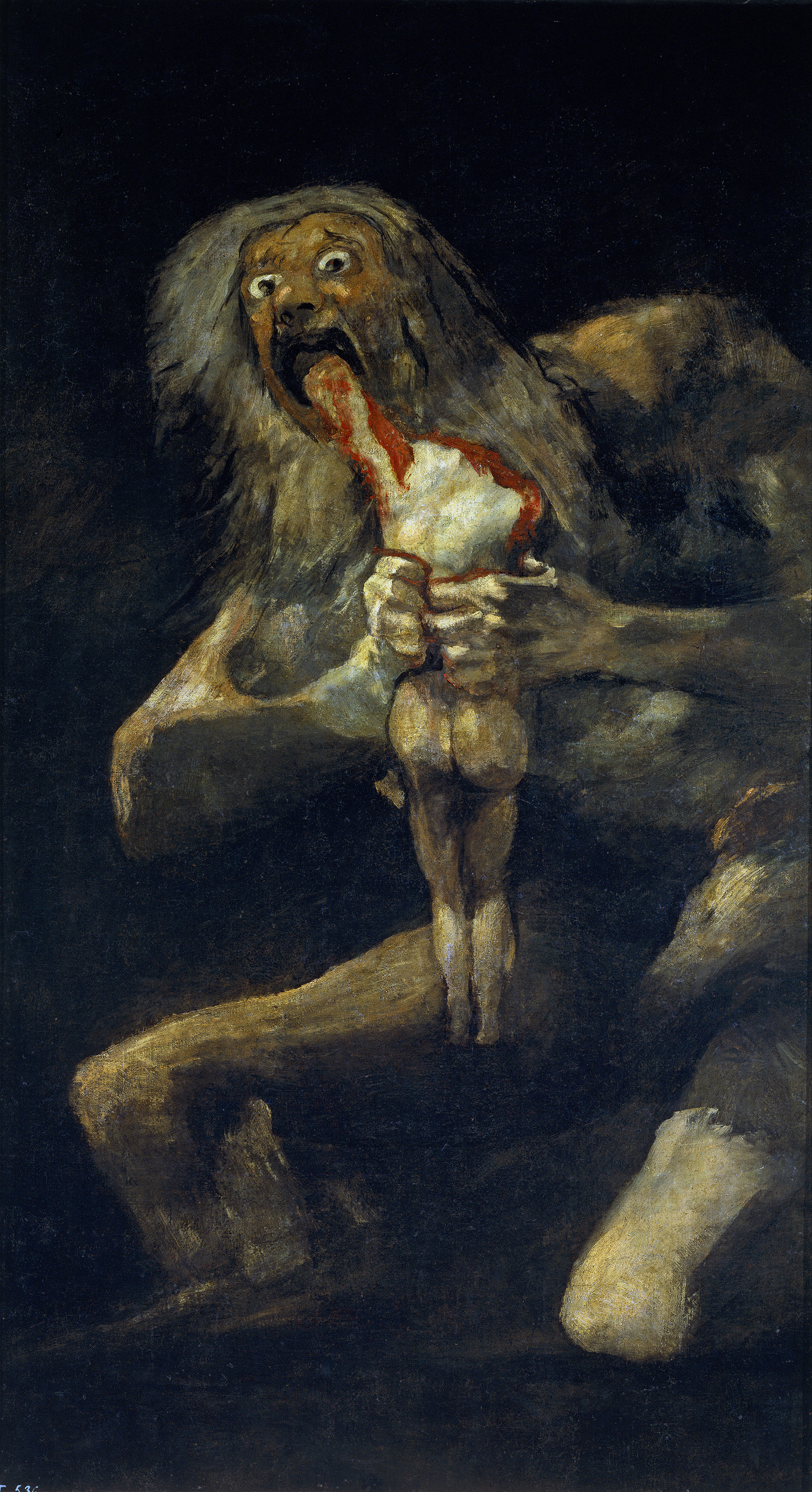
Saturn Devouring His Son